
 Business License
Understanding CCO Wear Plate: The Bimetallic Structure and Carbide Layer Explained
A maintenance supervisor at a coal preparation plant watched his transfer chute fail for the fifth time in eighteen months. The 14 mm abrasion-resistant steel liners had been worn through at the impact zone, and each replacement shutdown cost the plant roughly two days of output.
When he finally switched to a chromium carbide overlay plate, the same section lasted well over a year before the first inspection. The difference did not come from a thicker liner. It came from the way the plate was built — two very different materials bonded into a single component.
That construction is called a bimetallic structure, and it is the defining feature of a CCO wear plate. This article explains what the two layers are, how the carbide layer forms, and why the combination outperforms single-material liners.
1. What Makes CCO Wear Plate "Bimetallic"
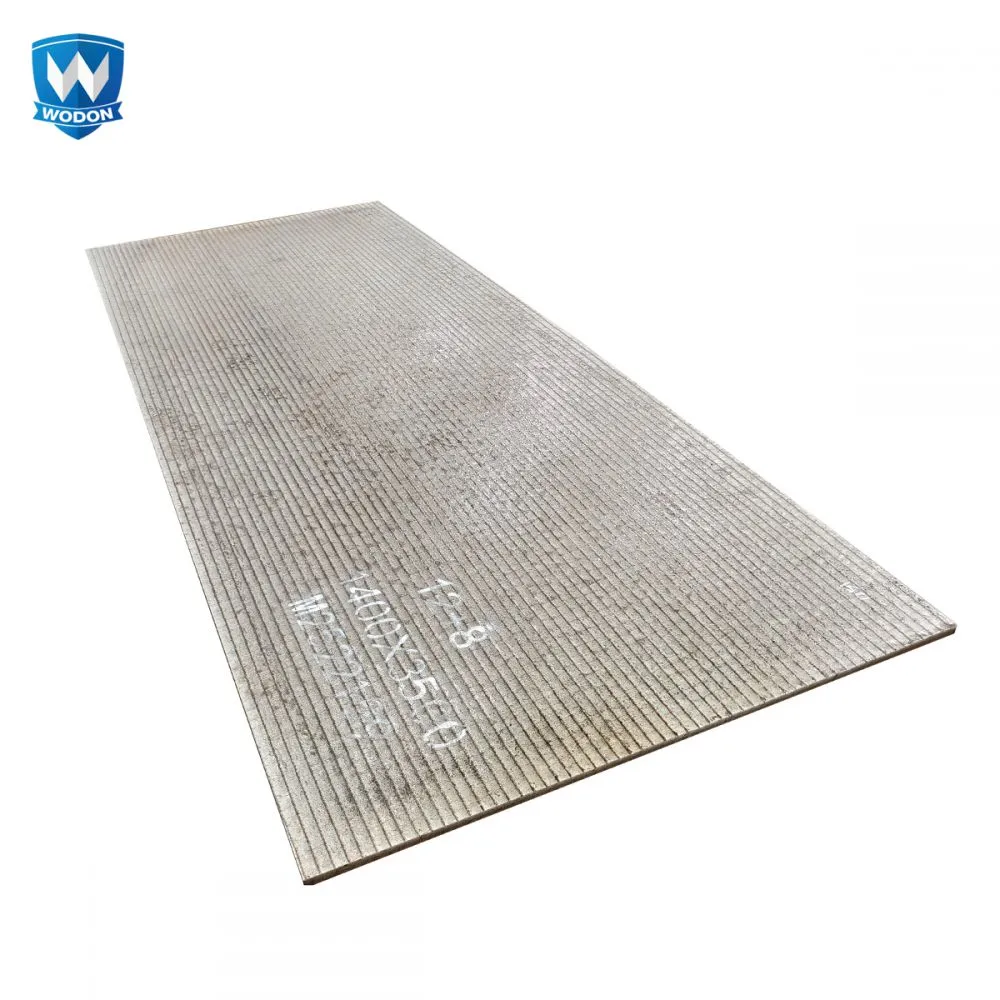
A bimetallic wear plate is a composite of two metallurgically bonded layers. The base layer is a structural steel plate that provides strength, stiffness, and a surface for welding or bolting into place. The working layer is a weld-deposited overlay of chromium carbide — a hard, wear-resistant alloy that faces the abrasive material.
The two layers are not glued or mechanically attached. They are fused by welding heat, which creates a continuous metallurgical bond across the interface. This bond is the reason the plate behaves as one component rather than two.
The term "bimetallic" distinguishes this product from homogeneous wear materials such as AR400 or AR500 steel, where the same alloy runs through the full thickness. A CCO wear plate instead pairs a tough base with a hard face, allowing each layer to perform its intended role.
2. The Anatomy of a CCO Wear Plate: Base Plate and Overlay
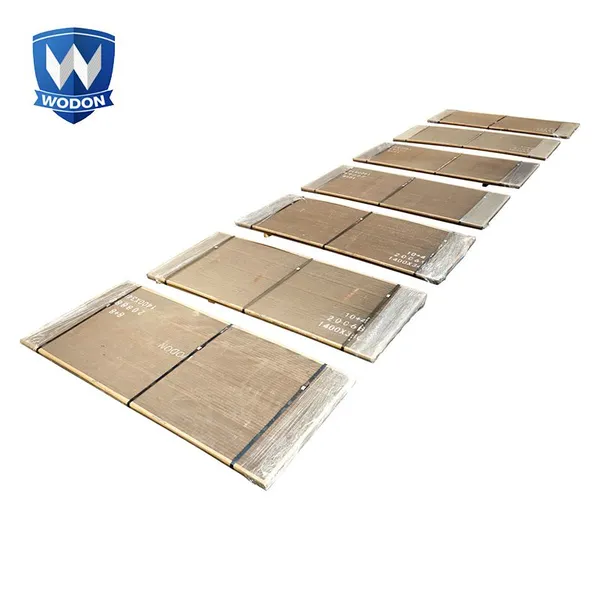
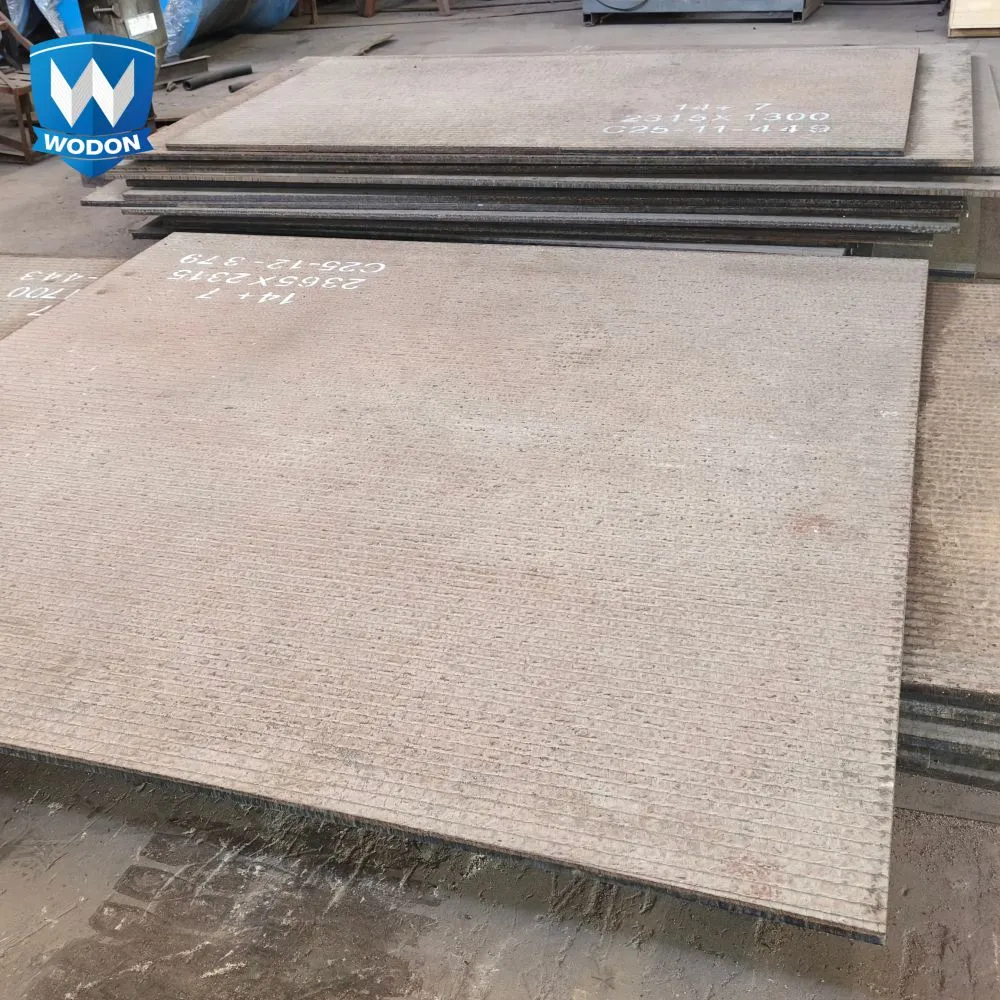
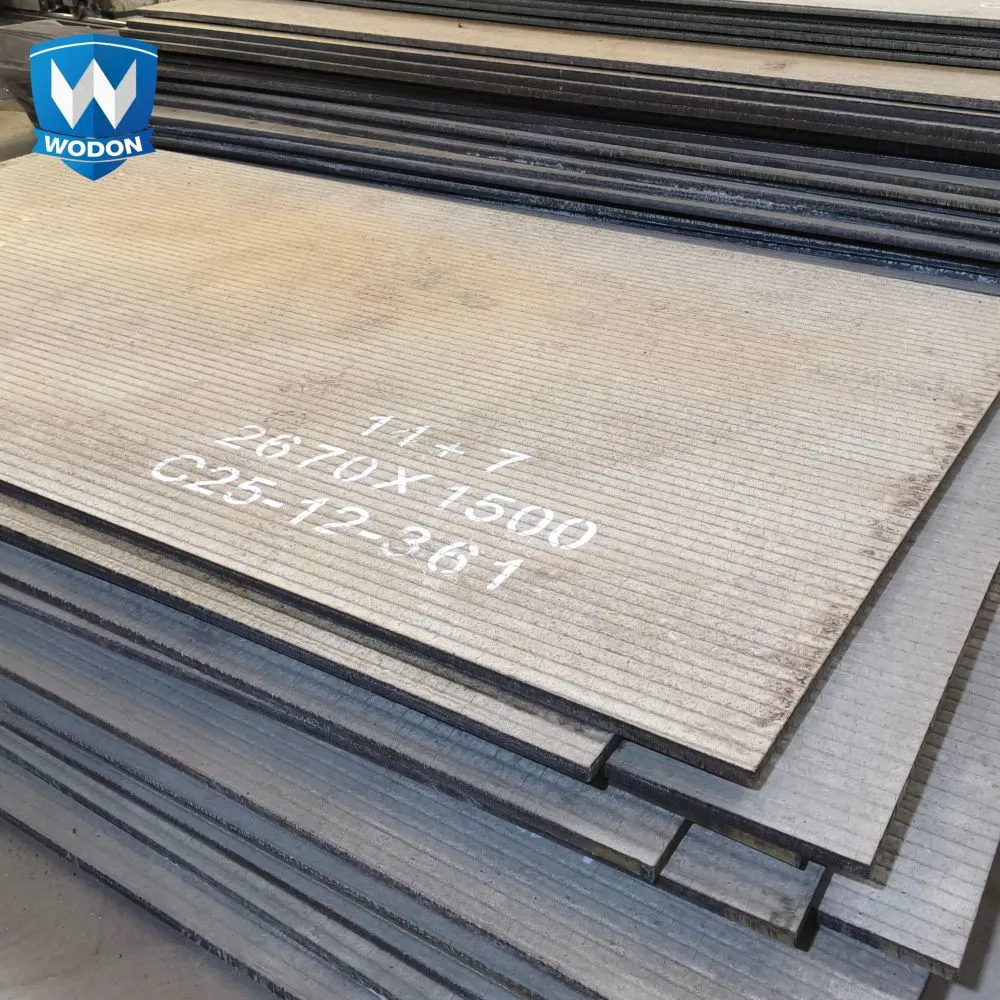
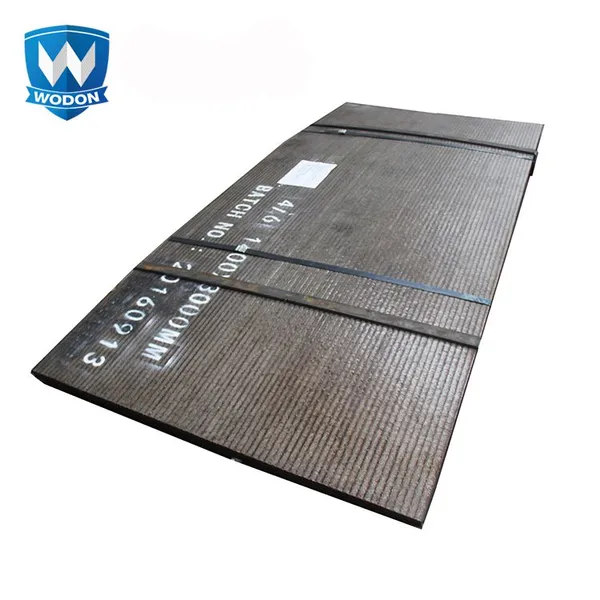
A standard CCO wear plate is described by two numbers, such as 8+4 or 10+6. The first number is the base plate thickness in millimeters; the second is the overlay thickness. An 8+4 plate therefore has an 8 mm steel base and a 4 mm carbide overlay, for a total thickness of 12 mm.
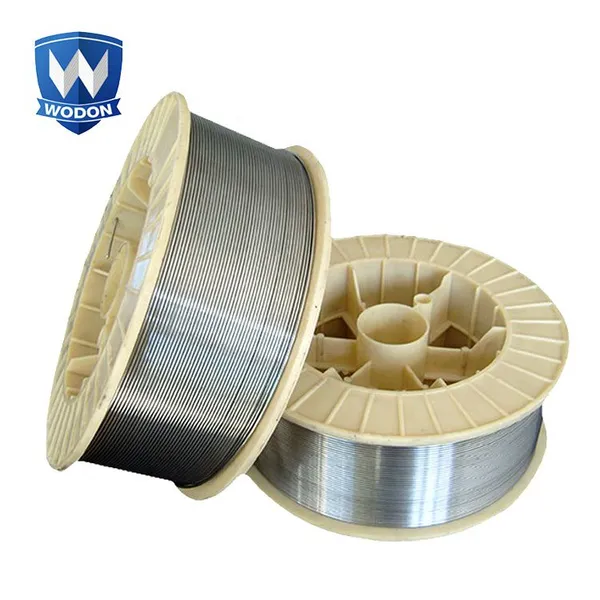
The base plate is normally a carbon or low-alloy steel such as Q235 or Q345, selected for weldability and cost. The overlay is applied to one face by automatic open-arc welding, using a hardfacing flux core wire that deposits the chromium carbide alloy in controlled passes.
Each layer serves a distinct function in service. The table below summarizes their roles.
| Layer | Typical Thickness | Primary Function | Typical Material |
|---|---|---|---|
| Base plate | 5–20 mm | Structural strength, impact support, attachment | Q235 / Q345 carbon or low-alloy steel |
| Carbide overlay | 3–12 mm | Abrasion resistance, wear allowance | Chromium carbide alloy, 55–65 HRC |
The balance between the two layers is a design decision. A thicker base suits high-impact service, while a thicker overlay suits high-abrasion, low-impact service.
3. The Carbide Layer: Cr₇C₃ Particles and the Supporting Matrix
The overlay is not a uniform alloy. It is a composite microstructure made of hard chromium carbide particles dispersed in a softer iron-based matrix. The primary carbide phase is Cr₇C₃, which forms as fine needle-like or rod-shaped crystals during solidification.
Cr₇C₃ is significantly harder than most minerals that cause industrial wear. Its hardness is roughly 1,400 to 1,800 HV, compared with quartz at approximately 1,100 HV. When an abrasive particle slides across the surface, the carbide phase resists cutting while the matrix holds the carbides in place.
This two-phase structure is the key to wear resistance. The carbide volume fraction typically ranges from 30% to 50% depending on the alloy formulation and welding parameters, and higher carbide fractions generally produce higher abrasion resistance at some cost in toughness.
The overlay alloy is formulated through the flux core wire, whose fill powder carries the alloying elements into the weld pool. Typical composition ranges for a chromium carbide hardfacing overlay are shown below.
| Element | Typical Range (%) | Role in the Overlay |
|---|---|---|
| Carbon (C) | 4.0 – 6.5 | Forms the Cr₇C₃ carbide phase |
| Chromium (Cr) | 22 – 32 | Primary carbide former, gives hardness |
| Manganese (Mn) | 1.0 – 3.0 | Deoxidizer, toughens the matrix |
| Silicon (Si) | 0.5 – 2.0 | Deoxidizer, improves weld flow |
| Iron (Fe) | Balance | Matrix base |
Small additions of elements such as boron or niobium are used in some formulations to refine the carbide size. The exact recipe is proprietary to each manufacturer and is a major factor in plate-to-plate consistency.
4. How the Overlay Is Bonded to the Base Plate
During manufacture, the hardfacing flux core wire is melted by an open arc and deposited directly onto the prepared base plate surface. The molten weld pool penetrates the base metal, and as it solidifies, a dilution zone forms at the interface where the two alloys mix.
The result is a metallurgical bond with shear strength close to that of the base material itself. Unlike bolted or adhesive liners, a CCO wear plate cannot delaminate under normal service because the layers are fused at the atomic level.
Dilution is the controlled mixing of base metal into the first overlay pass. In practice, the first pass typically contains 15% to 25% base metal, which softens the immediate interface zone. A second pass restores full hardness at the surface. This is why multi-pass overlays are specified when maximum wear life is required.
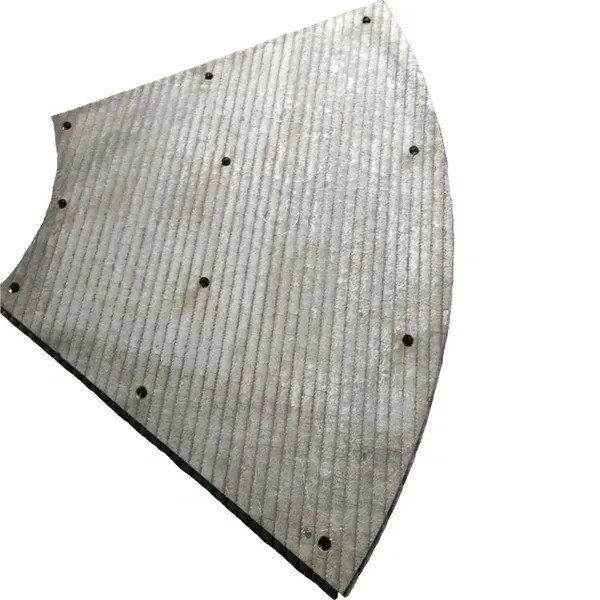
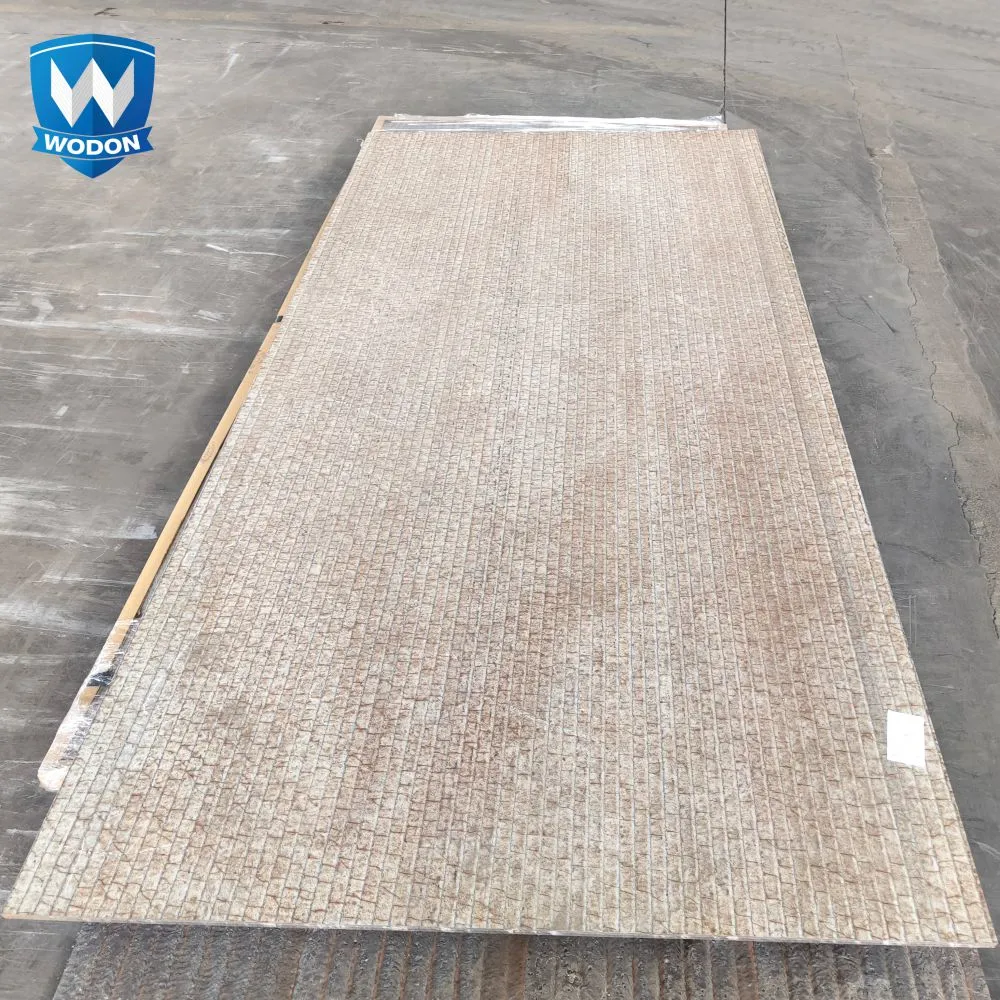
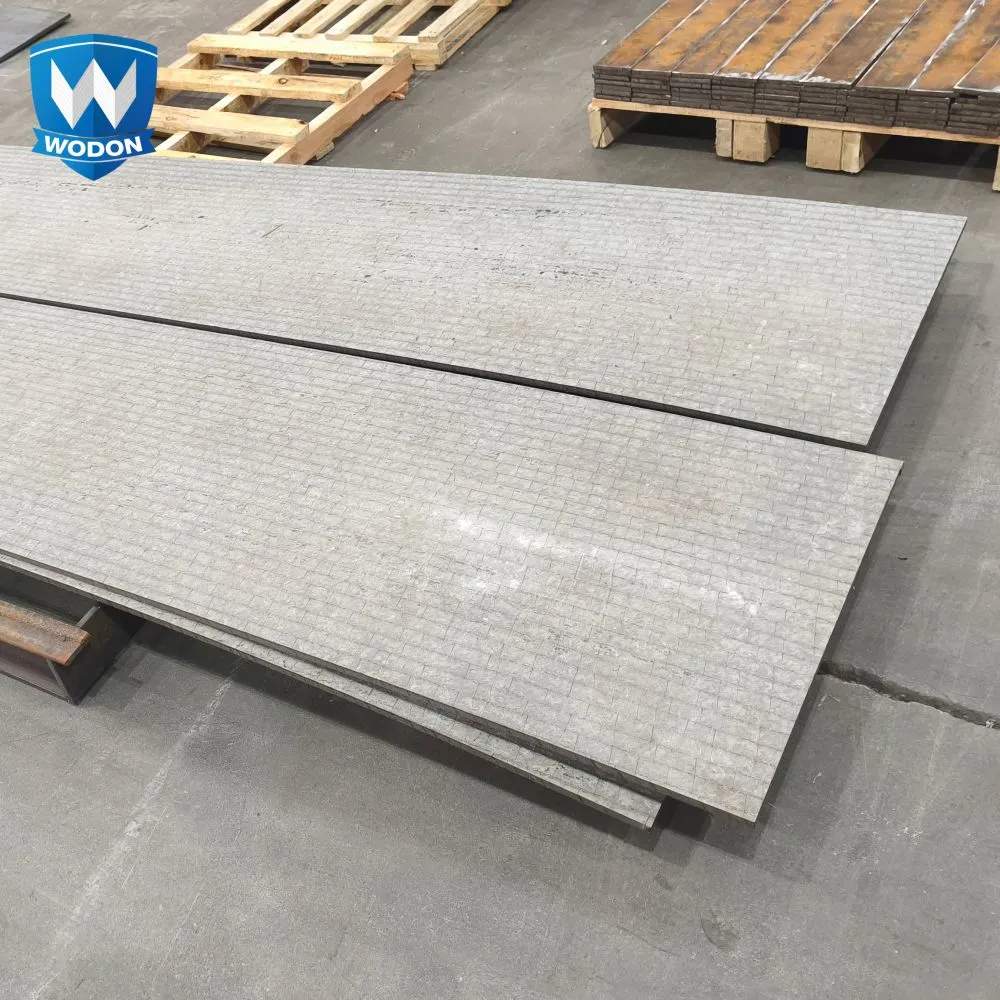
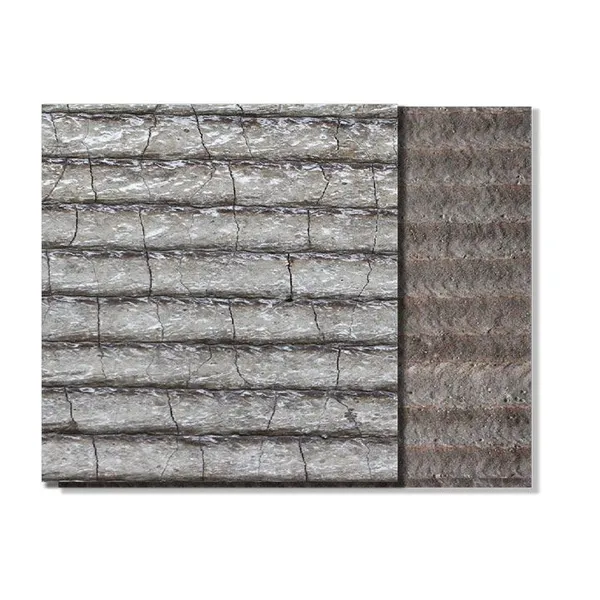
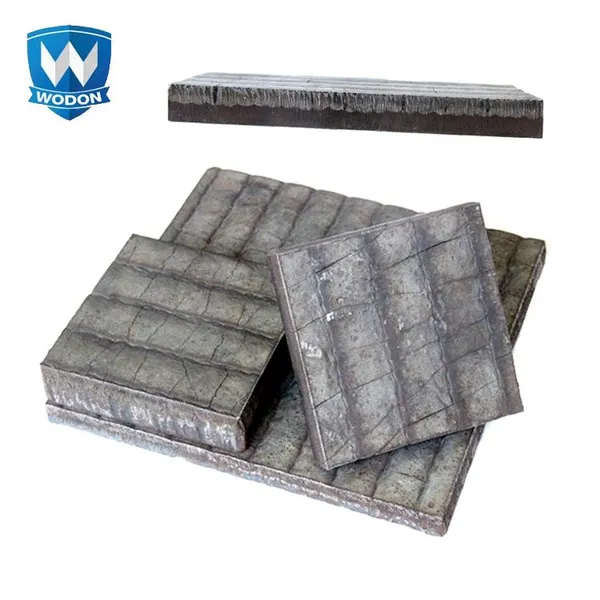
A network of fine stress-relief cracks forms in the overlay as it cools. These cracks run perpendicular to the welding direction and stop at the interface, typically spaced 5 to 15 mm apart. They are a normal feature of the process and do not affect performance.
5. Key Properties Shaped by the Bimetallic Design
The bimetallic construction produces a combination of properties that no single material matches. Abrasion resistance comes from the carbide overlay, which can outlast AR400 steel by a factor of roughly 3 to 8 times in sliding abrasion tests.
Impact resistance comes from the ductile base plate, which absorbs energy and prevents catastrophic cracking. Structural stiffness allows the plate to be used as a liner, a wear strip, or even a fabricated component such as a chute floor or hopper wall.
Repairability is another advantage. When the overlay is eventually consumed, the plate can be re-overlaid on site with the same hardfacing flux core wire, restoring the wear allowance at a fraction of the replacement cost. This extends the total service life well beyond the first wear cycle.
Temperature behavior also follows the bimetallic design. The carbide overlay retains most of its hardness up to roughly 500°C, while the base plate carries the structural load at elevated temperature as long as its grade is selected accordingly. This split lets the plate serve applications that would quickly soften a homogeneous AR steel liner.
Cost is evaluated per tonne of material processed, not per square meter. A CCO wear plate typically costs roughly 2 to 4 times more than AR400 on a unit-area basis, yet its longer life usually reduces the total cost of wear protection in high-abrasion duty.
6. Standard Configurations: Thickness Combinations and Their Roles
Manufacturers offer a range of standard configurations, and the choice depends on the severity of impact and abrasion at the application point. The most common combinations are summarized below.
| Configuration | Total Thickness | Typical Service | Application Examples |
|---|---|---|---|
| 6+4 | 10 mm | Moderate abrasion, low impact | Screen panels, deflector plates, light chutes |
| 8+4 | 12 mm | General abrasion, moderate impact | Chute liners, hopper walls, conveyor skirts |
| 8+6 | 14 mm | Heavy abrasion, moderate impact | Transfer points, crusher feed chutes |
| 10+6 | 16 mm | Severe abrasion and impact | Primary crusher discharge, bunker liners |
| 10+8 | 18 mm | Extreme impact zones | Impact plates, feed hoppers, grizzly decks |
For applications where a single overlay pass is insufficient, multi-layer overlays build up to 12 mm or more. Each additional pass adds wear allowance but also adds cost and welding time.
7. Choosing the Right Base Plate Grade
The base plate grade should match the operating environment. For room-temperature dry abrasion, a Q235 carbon steel base is usually sufficient. For elevated temperatures, higher service loads, or repeated impact, a Q345 low-alloy base provides better strength retention.
Temperature is the most common reason to upgrade the base grade. Above roughly 250°C, carbon steel begins to lose strength and may distort, so applications such as clinker handling or hot sinter chutes typically specify a low-alloy or heat-resistant base.
Weldability matters as well. The base plate must accept the initial overlay and also field welding during installation. Suppliers should confirm the base grade and its weld procedure before fabrication.
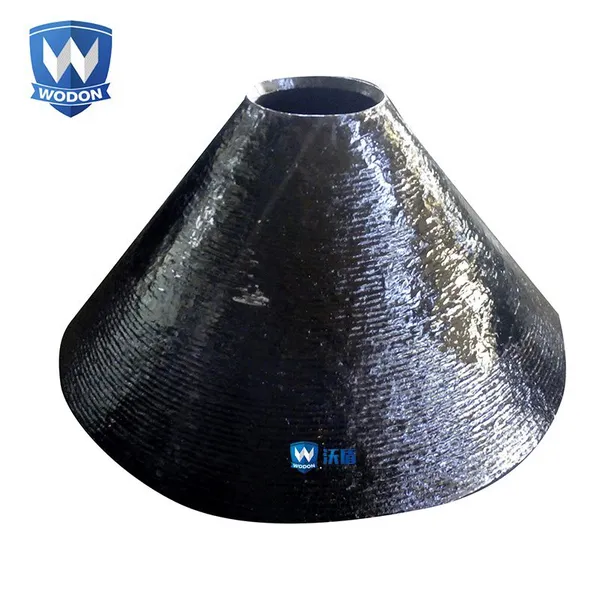
For curved applications, the plate can be rolled before the overlay is applied, or the overlay can be deposited onto a pre-formed base. Bending a finished CCO plate after welding risks opening the stress-relief cracks, so forming is normally done on the base material first. A general guideline is to keep the bend radius at least 10 times the total plate thickness.
8. A Field Example: Coal Handling Transfer Chute
A coal handling terminal in Southeast Asia replaced its 16 mm mild steel chute liners with 8+4 CCO wear plates some time ago. The chute transferred roughly 1,800 tonnes of coal per hour, and the previous liners lasted about seven months before the impact zone wore through.
After the change, the impact zone showed roughly 2 mm of overlay loss after fourteen months, and the sliding sections less than 1 mm. The maintenance team projected a total life of roughly three years for the main liner set — roughly five times the previous interval. The annual liner cost, including labor and downtime, dropped by an estimated 60%.
A second, smaller example comes from a cement plant that lined its belt conveyor transfer point with 6+4 plates. The previous rubber-lined skirt boards lasted nine months; the CCO plates have now been in service for over two years with only minor edge wear.
In both cases the key metric was the same: millimeters of overlay consumed per thousand tonnes handled. Tracking this figure after installation gives an operator the data to predict replacement timing and to compare suppliers on a factual basis.
9. Quality Indicators to Check When Sourcing
Not all bimetallic wear plates are manufactured to the same standard, and a few checks reveal the difference. The overlay surface should show a uniform, consistent crack pattern with regular spacing, indicating controlled heat input during welding.
The carbide content should be verifiable. Reputable suppliers provide hardness reports and, where requested, chemical analysis of the overlay. A hardness reading of 55 to 65 HRC on the working face is a typical acceptance criterion for chromium carbide overlays.
China Wodon, as a specialist manufacturer, offers CCO wear plate in standard configurations and custom sizes, with quality documentation provided for export orders. Jiangsu Wodon Wear Resistant New Material Co., Ltd. supplies the plate, the matching hardfacing flux core wire, and fabrication support from a single source. For buyers evaluating suppliers, requesting a sample plate and a hardness report is a practical first step.
10. FAQ: Bimetallic CCO Wear Plate
10.1 How long does a bimetallic CCO wear plate last?
Service life depends on the abrasive medium, impact energy, and overlay thickness. In moderate abrasion such as coal handling, an 8+4 plate typically serves for roughly 2 to 4 years. In severe service with hard mineral particles, the same plate may last 8 to 18 months. Wear rate in millimeters per thousand tonnes processed is the reliable way to compare life across applications.
10.2 Can a worn CCO wear plate be re-overlaid?
Yes. When the overlay is consumed but the base plate is still sound, the surface can be re-surfaced on site using the same hardfacing flux core wire. This restores the wear allowance at a fraction of the cost of a new plate. The base plate should be inspected first for thickness loss and distortion before deciding to rebuild rather than replace.
10.3 What is the difference between CCO and AR steel plate?
AR (abrasion-resistant) steel is a single homogeneous alloy with a hardness of roughly 400 to 500 HB, and it wears uniformly through its full thickness. A CCO wear plate has a hard carbide overlay on a softer structural base, so its working face is roughly three times harder than AR400 while the base stays tough. For the same wear allowance, CCO plates generally deliver a longer life but at a higher initial price.
10.4 Does the crack pattern on the overlay indicate poor quality?
No. A fine network of transverse stress-relief cracks is normal in chromium carbide overlays and confirms that the overlay has properly relieved residual stress. Uniform spacing of roughly 5 to 15 mm indicates consistent welding parameters. Plates with large irregular cracks, or cracking that extends into the base plate, are the signs to reject.
Recently Posted
-
Selecting Hardfacing Flux Core Wire: 7 Key Parameters to Evaluate Before Buying
September 3, 2026A steel mill maintenance manager ordered a low-priced hardfacing wire for rebuilding crusher hammers, attracted by a price roughly Read More
 -
CCO Wear Plate vs. Ceramic Alumina Lining: Which Solution Fits Your Abrasion Challenge?
September 3, 2026A quarry operator had lined the feed chute of his secondary crusher with ceramic alumina tiles. Within six weeks, the tiles in the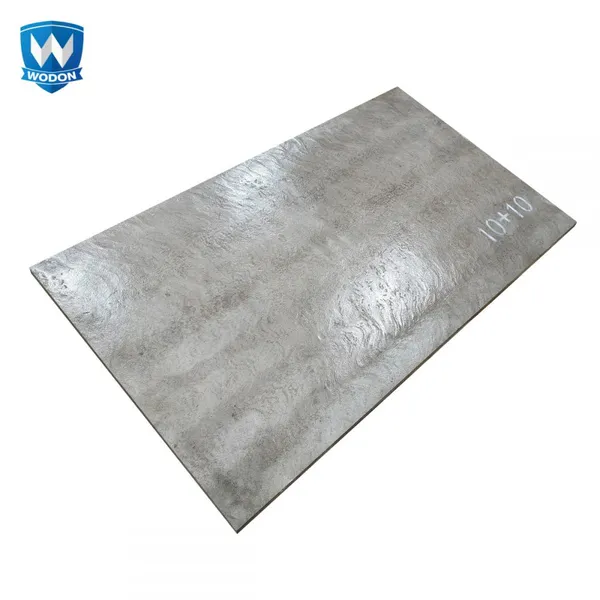 Read More
 -
Jiangsu Wodon: Chromium Carbide Overlay Wear Solutions from China's Advanced Manufacturing Base
August 13, 2026When a mining operation in Chile needed 400 square meters of chromium carbide overlay wear plate for a SAG mill feed chute rebuild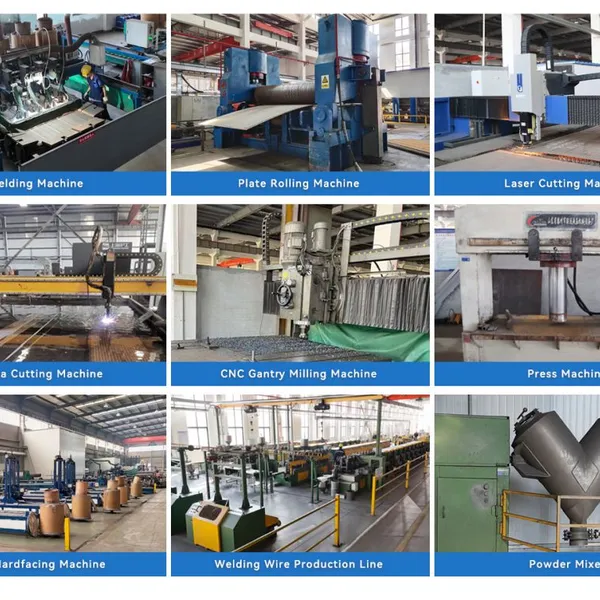 Read More
 -
CCO Wear Plate Applications in Mining: Chutes, Hoppers, and Crusher Liners
August 13, 2026An iron ore mine in Western Australia was replacing the discharge chute liners on its primary crusher every 11 weeks. The 12 mm mi Read More

Contact Us
Recommended Products
-
 Chromium Carbide Overlay Wear Plate WD-1900 Smooth Surface CCO Wear PlateNegotiableMOQ: 1 Square Meter
 -
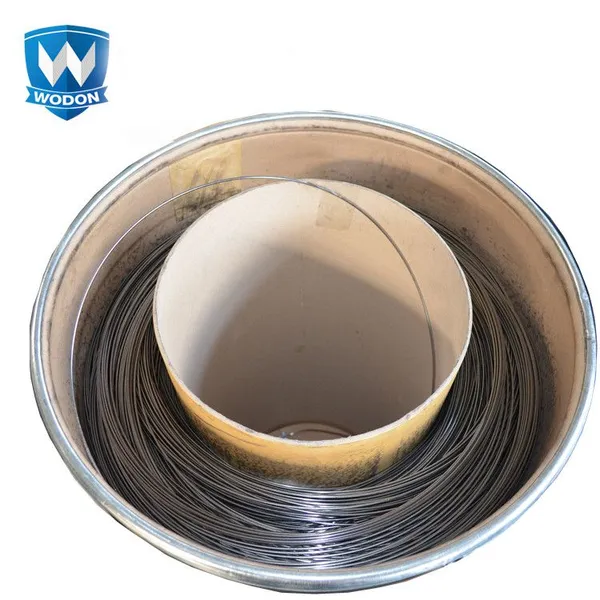
Hardfacing Wear Resistant Flux Cored Welding Wire With High HardnessNegotiableMOQ: 1 Kilogram
-
High Abrasion Resistant Hardfacing Wear Liners Chromium Carbide Overlay Cco Bimetallic Wear PlateNegotiableMOQ: 1 Square Meter
-
Chrome Carbide Wear Resisting Plate High Wear Steel Plate Wear Liner Platebimetallic Wearable Lining Plate Bucket ExcavatorCHF 300 - 300MOQ: 1 Square Meter
-
Wodon Customizable Steel Flux Cored Welding Wire Manufacturer's Valve Surfacing Gas Shielding OEM SupportUS$ 4.02 - 4.02MOQ: 1 Kilogram
-
Abrasive Resistence Wear Parts Overlay Carbon Chromium Steel PlateNegotiableMOQ: 1 Square Meter
-
Wear Plates for Heavy Duty Mining Applications High Chromium Carbide Overlay Abrasion Resistant and Customizable SizesNegotiableMOQ: 1 Square Meter
-
Hardfacing Truck Liner Plate Chromium Carbide Overlay Wear Plate Cladded PlateNegotiableMOQ: 1 Square Meter
-
Custom Overlaying Wear Plate - Economical Choice for Durable Industrial Applications, High-Quality Fabrication, 55HRC HardnessNegotiableMOQ: 1 Square Meter
-
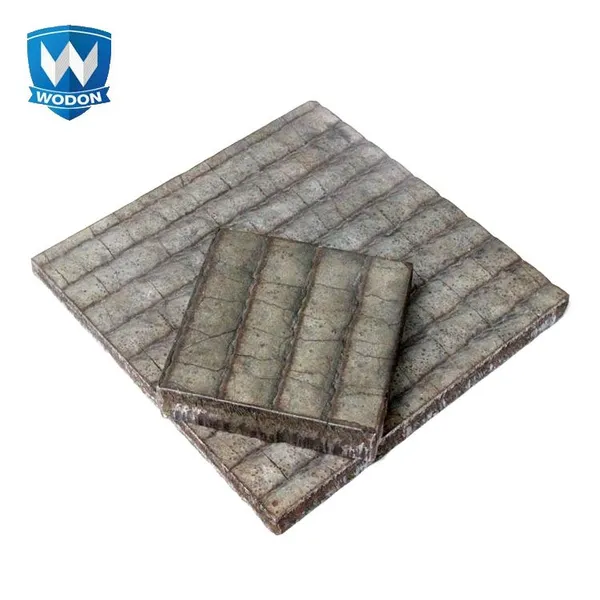
Wear Abrasion Resistant Overlay High Carbon High Chromium Steel PlateNegotiableMOQ: 1 Square Meter
-
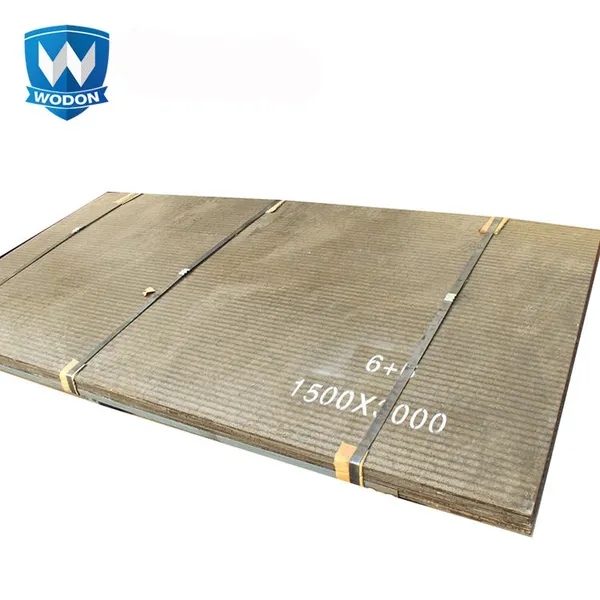
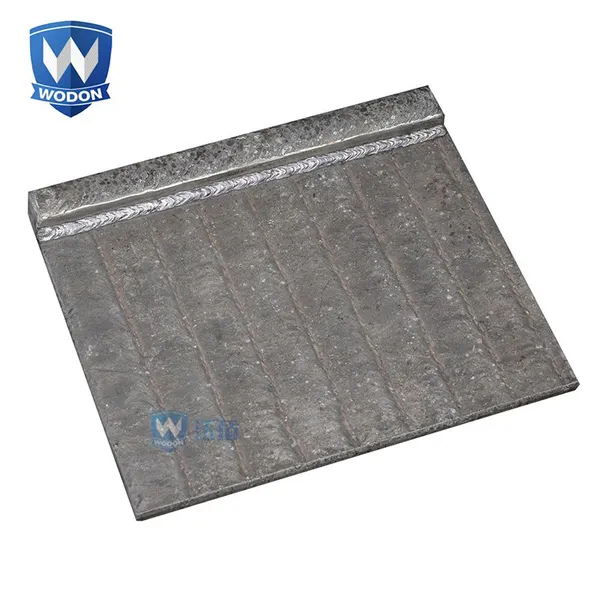
Wear Resistant Steel Plate 6mm 8mm 12mm Thickness Hot Rolled Carbon Steel Plate Wear PlateNegotiableMOQ: 1 Square Meter
-
Bimetallic Cco Clad Composite Overlay Hardfacing Wear Resistant Steel PlateNegotiableMOQ: 1 Square Meter
-
High-Performance Wear Plates for Cement Mills Chromium Carbide Overlay Long Service Life Reliable PerformanceNegotiableMOQ: 1 Square Meter
-
Wear Resistant Steel Plate Liners for Chutes Special Use Wear LinersNegotiableMOQ: 1 Square Meter
-
Cco Hardfacing Surfacing Tungsten Carbide Wear Resistant Plates Liner for SilosNegotiableMOQ: 1 Square Meter
-
Wodon Chromium Alloy Bimetal Hardfacing Plate for Mining MachineryCHF 300 - 300MOQ: 1 Square Meter
-
Hardfacing Abrasion High Wear Resistant Performance Cladding Plate TubeUS$ 399.69 - 399.69MOQ: 1 Square Meter
-
Hardfacing Plates for Manufacture Industry Value High Chrome Wear PlateUS$ 100 - 300MOQ: 1 Square Meter
-
Customizable OEM/ODM Wear-Resistant Soldering & Surfacing Flux Cored Welding WiresUS$ 9.9 - 9.9MOQ: 1 Kilogram
-
Chromium Carbide Round Pipe 6m and 12m Lengths Bending & Cutting Services Welding Technique Saw TechniqueUS$ 6 - 6MOQ: 1 Square Meter