
 Business License
Chromium Carbide Overlay Wear Plate: What It Is and How It Works
A copper mine in South America was losing roughly 14 days of production every quarter. The culprit was not the ore body or the processing circuit — it was the chute liners. Made from standard mild steel plate, they wore through in under 90 days, forcing the maintenance team into a relentless cycle of shutdowns, replacement welding, and restart procedures.
Each unplanned stoppage cost the operation an estimated $45,000 in lost throughput, not counting labor and replacement material. When the mine switched to chromium carbide overlay wear plate liners, that 90-day replacement window stretched to roughly 16 months. The plates were still wearing, but at a rate the operation could plan around. This article explains what a chromium carbide overlay wear plate is, how it is made, what gives it its wear-resistant properties, and where it fits in an industrial wear protection strategy.
1. What Is a Chromium Carbide Overlay Wear Plate?
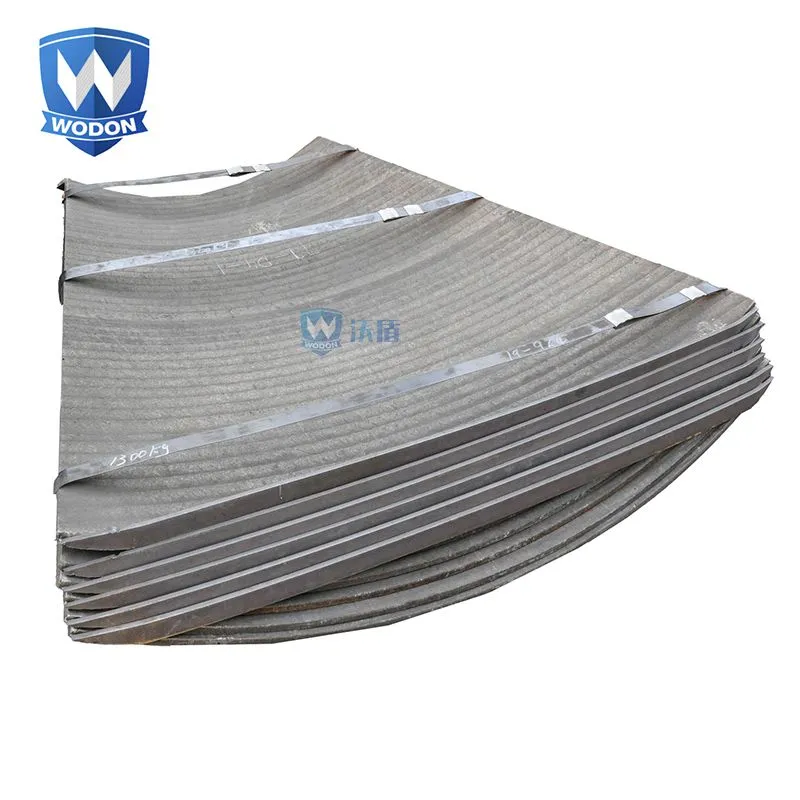
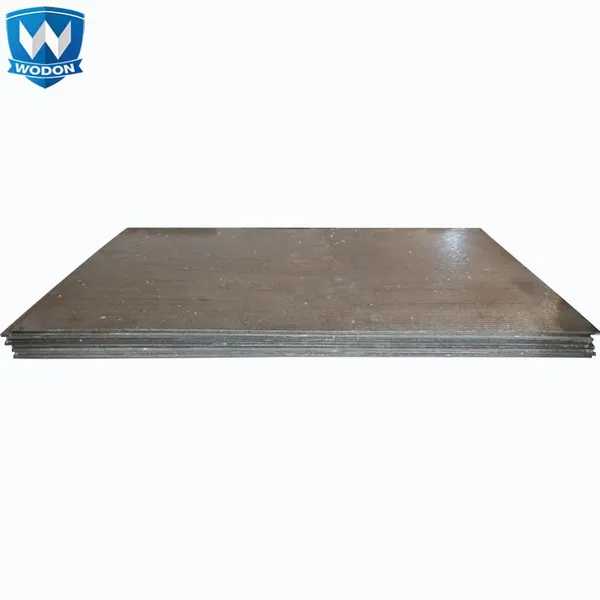
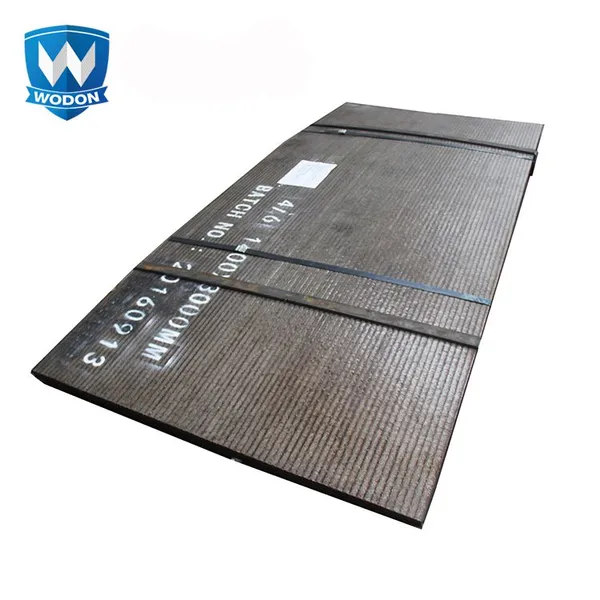
A chromium carbide overlay wear plate is a composite steel plate consisting of a mild steel or low-alloy steel base plate onto which a layer of chromium carbide-rich hardfacing alloy has been deposited through a welding process. The base plate provides structural strength and weldability, while the overlay layer — typically 3 mm to 8 mm thick in a single pass — supplies the wear resistance. This is not a coating or paint; it is a metallurgically bonded layer formed by melting a hardfacing consumable directly onto the steel substrate.
As the molten pool solidifies, hard chromium carbides (primarily Cr₇C₃) precipitate in a ductile iron matrix. This creates a microstructure that combines surface hardness in the range of 55 to 65 HRC with enough toughness to withstand moderate impact. Carbide microhardness values typically reach roughly 1,400 to 1,800 HV, and the carbide volume fraction commonly sits between 30% and 50%. Properly manufactured CCO plates can outlast mild steel by a factor of 5 to 12 in abrasive service conditions.
From a procurement standpoint, a chromium carbide overlay wear plate occupies a position between inexpensive mild steel that wears quickly and costly solid alloy castings that are difficult to fabricate. It delivers the wear life of a high-alloy material at a fraction of the material cost, and it can be welded, plasma-cut, and formed to radius — capabilities that solid castings simply cannot match.
2. The Bimetallic Structure: Base Plate and Overlay Layer
Every CCO wear plate is, at its core, two materials fused into one — a bimetallic composite. The base plate is generally a low-carbon steel such as Q235 or ASTM A36. Thicknesses commonly range from 4 mm to 12 mm, with 6 mm and 8 mm being the most widely used for general industrial protection.
The base plate serves three functions: providing a weldable substrate for attachment to equipment structures, carrying mechanical loads and resisting deformation, and acting as a heat sink during overlay welding to control the cooling rate of the hardfacing layer. The overlay layer is the working surface — the part that faces the abrasive flow. It consists of a hypereutectic iron-based alloy with primary chromium carbides embedded in a tougher austenitic or martensitic matrix.
The bond between base plate and overlay is metallurgical, not mechanical. The first pass of the welding arc melts a thin layer of the base plate surface, and the hardfacing alloy mixes with this molten pool at the interface. When process parameters are properly controlled — amperage, travel speed, preheat temperature — the bond line is free of porosity and delamination risks. A poorly bonded overlay can spall off in service, exposing the soft base plate to rapid wear.
3. How the Overlay Is Formed: The Welding Process
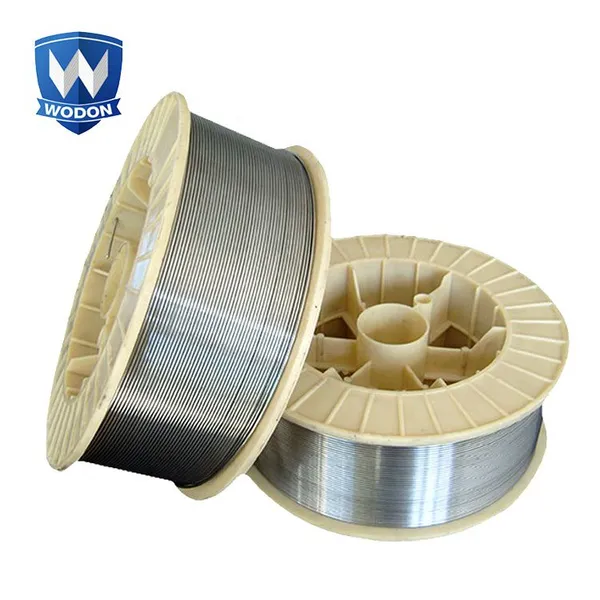
The manufacturing of a chromium carbide overlay wear plate involves depositing hardfacing material onto the steel base using either an open arc or submerged arc welding process. In open arc welding, a self-shielded flux core wire is fed through a welding gun. No external shielding gas is needed — the flux inside the tubular wire generates its own protective atmosphere and slag cover, making the process suitable for both workshop and field applications.
In submerged arc welding, the arc is buried under a layer of granulated flux that shields the molten pool and produces a smoother bead appearance. Deposition rates are higher — typically 8 to 15 kg of deposited metal per hour, compared to roughly 4 to 8 kg/h for open arc — but the process is generally restricted to flat-position workshop welding. Both methods produce sound overlays when parameters are correctly set.
The key variables are arc voltage, welding current, travel speed, and interpass temperature, which together determine the cooling rate and thus the size, distribution, and volume fraction of chromium carbides. Slower cooling allows larger primary carbides to form — beneficial for coarse-particle abrasion resistance — while faster cooling produces a finer carbide structure better suited to fine-particle sliding wear.
4. Key Properties That Determine Performance
Surface hardness, measured in the range of 55 to 65 HRC, is the most frequently quoted metric. But hardness alone does not predict wear life. Two plates with identical 60 HRC readings can perform very differently depending on carbide type, carbide volume fraction, and matrix toughness.
Carbide volume fraction is arguably more important. In a properly formulated iron-chromium-carbon alloy, the volume of primary M₇C₃ carbides can range from roughly 30% to over 50%. The higher the fraction, the better the resistance to low-stress scratching abrasion from materials like sand, coal, or mineral fines. Below roughly 25% carbide volume, wear resistance drops sharply because abrasive particles contact the softer matrix directly.
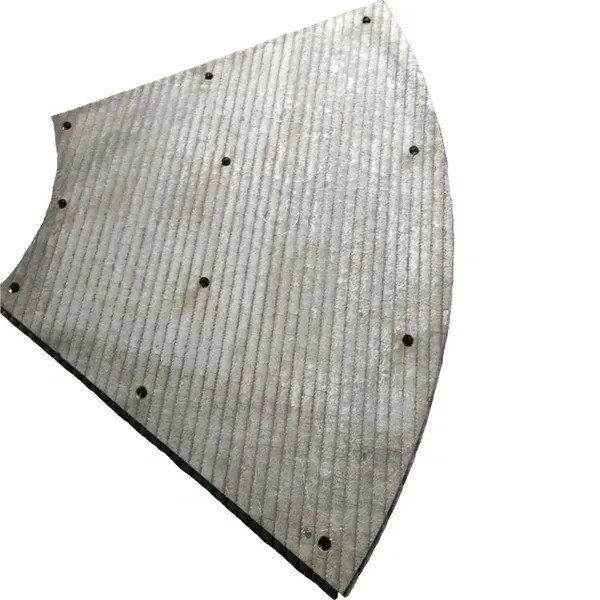
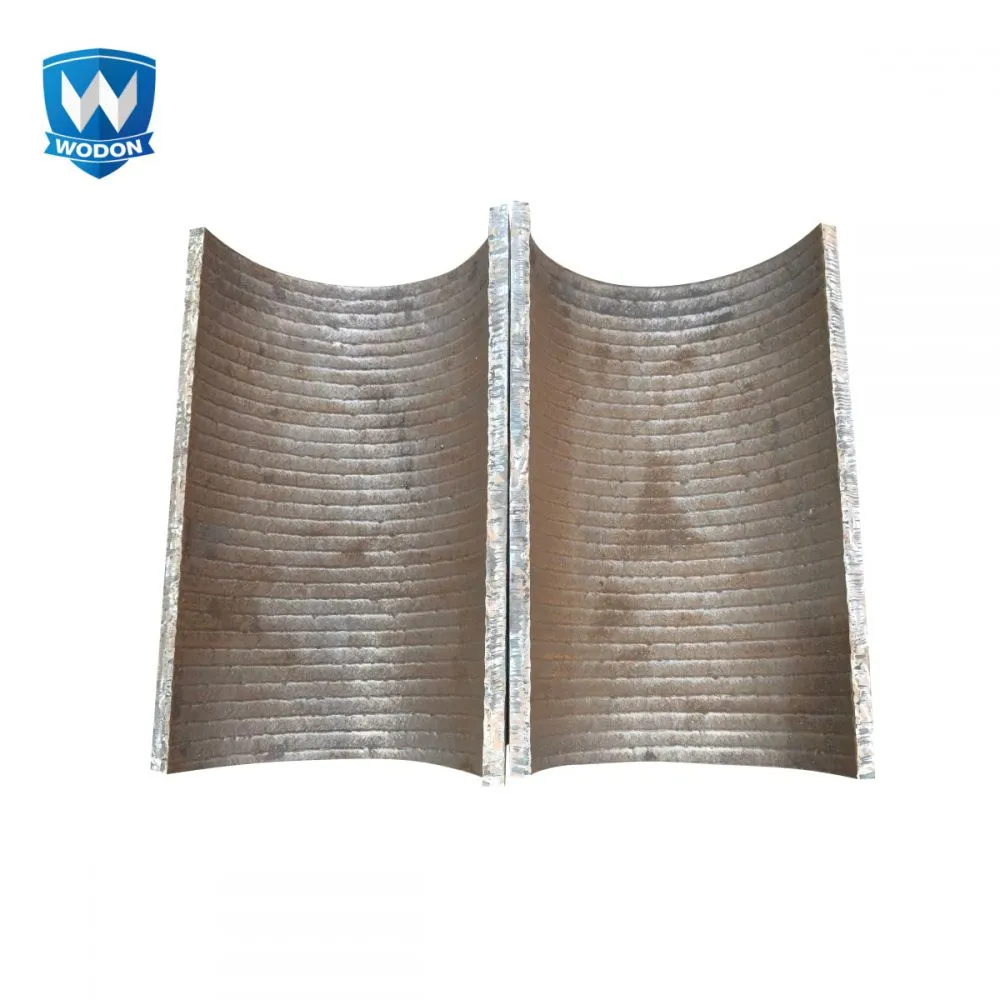
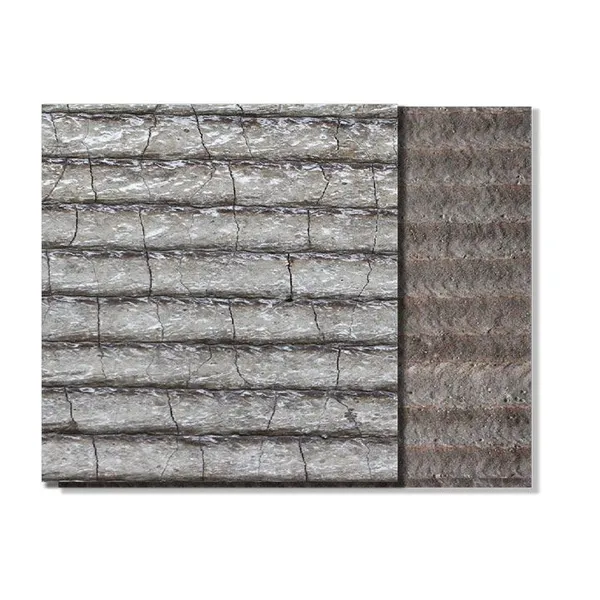
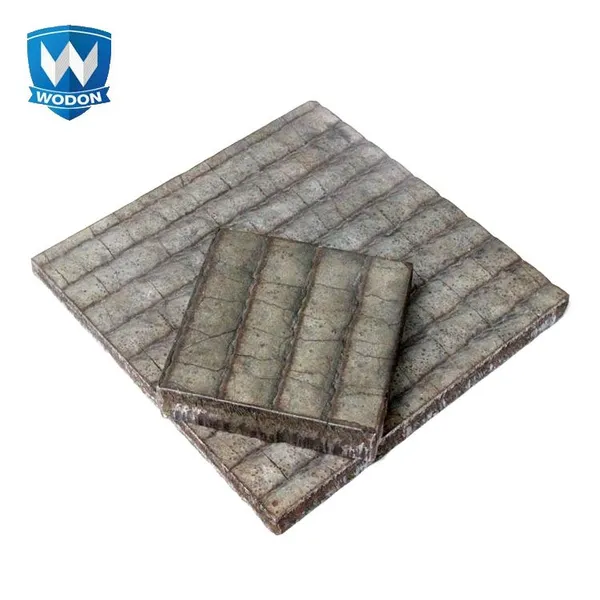
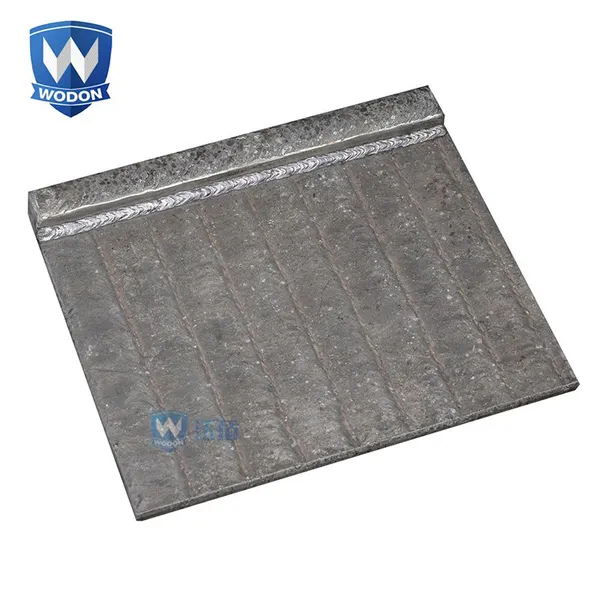
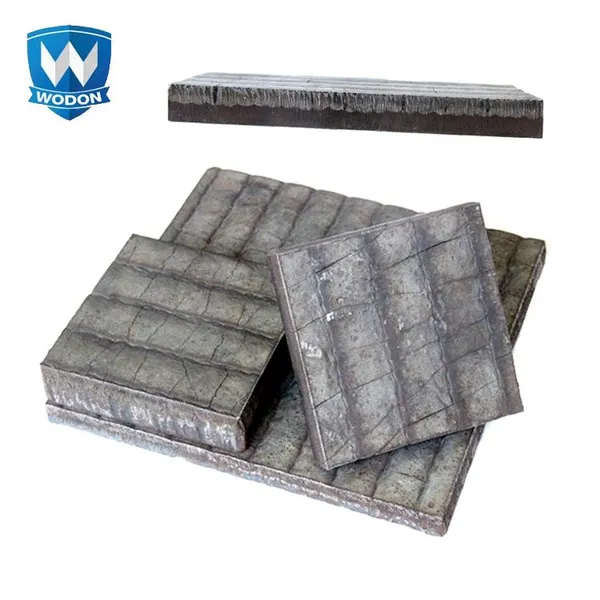
Crack resistance is another consideration. Chromium carbide overlays develop a network of fine transverse stress-relief cracks as they cool — this is normal and expected. The cracks form perpendicular to the welding direction and stop at the base plate interface.
A well-manufactured plate shows uniform crack spacing of roughly 5 to 15 mm. Plates with no cracks may indicate insufficient carbide content, while large irregular cracks suggest poor parameter control.
Bond integrity is verified through ultrasonic testing or bend testing, where a sample is bent to a specified radius. A sound bond shows no delamination between overlay and base plate, even when the overlay itself develops additional cracks during the bend test.
5. Common Configurations and Dimensions
CCO wear plates are manufactured in standard dimensions, though most suppliers — including Jiangsu Wodon Wear Resistant New Material Co., Ltd. — offer custom sizing to match specific equipment drawings. The table below summarizes common configurations.
| Configuration | Base Plate (mm) | Overlay (mm) | Total Thickness (mm) | Typical Application |
|---|---|---|---|---|
| 6+3 | 6 | 3 | ~9 | Light abrasion, hopper liners |
| 6+4 | 6 | 4 | ~10 | Chute liners, conveyor skirts |
| 8+4 | 8 | 4 | ~12 | Crusher housings, fan blades |
| 8+6 | 8 | 6 | ~14 | Heavy sliding abrasion, screen plates |
| 10+6 | 10 | 6 | ~16 | High-impact zones, crusher liners |
| 10+8 | 10 | 8 | ~18 | Severe abrasion + moderate impact |
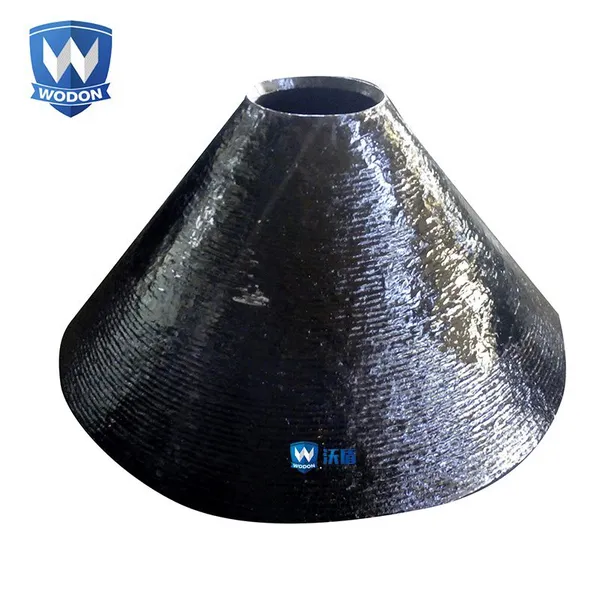
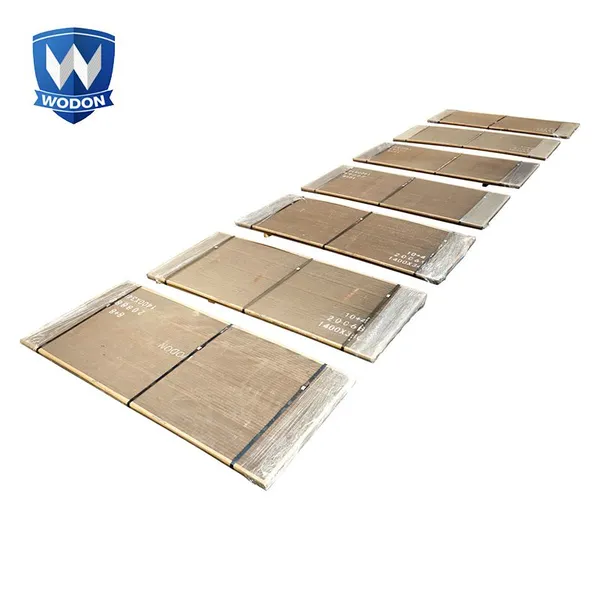
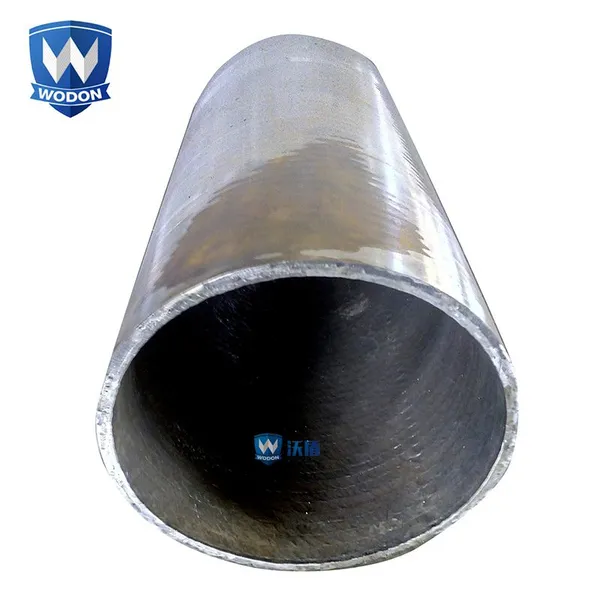
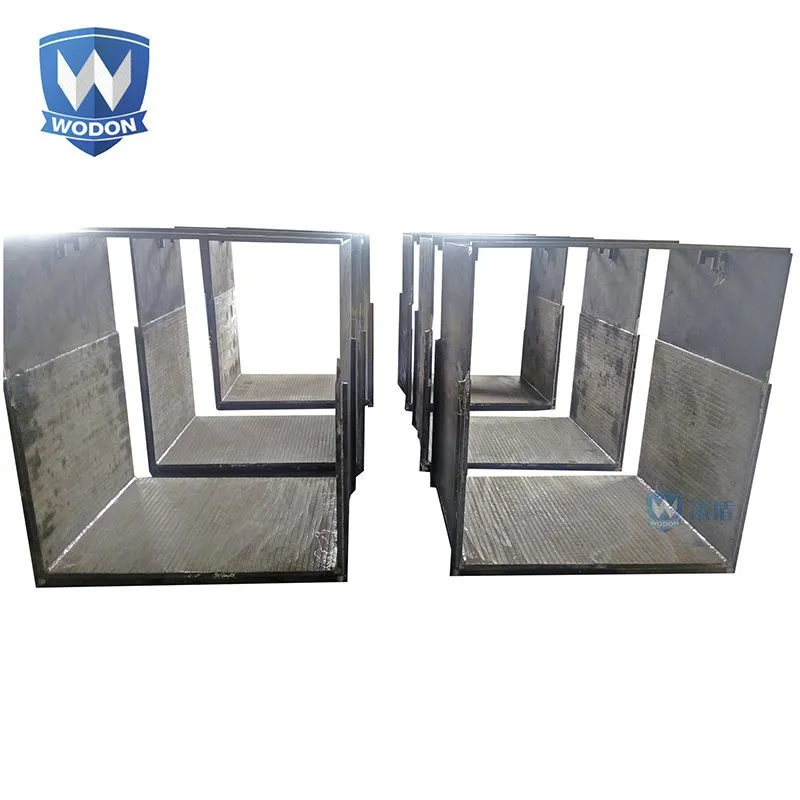
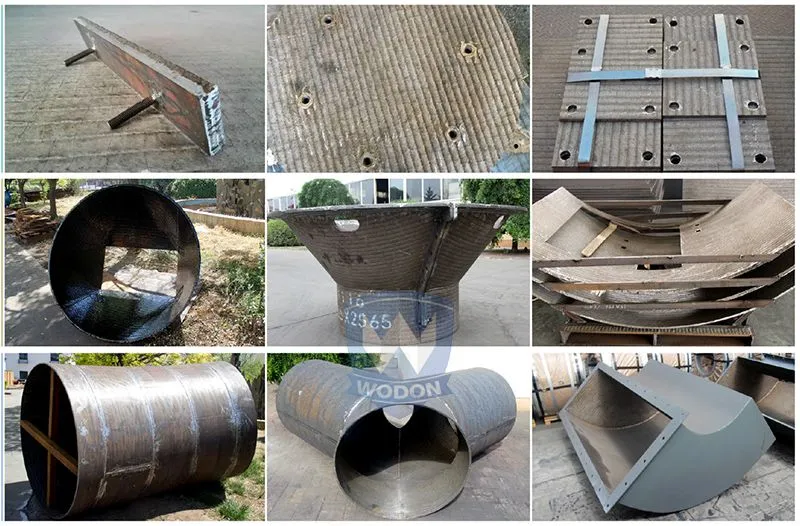
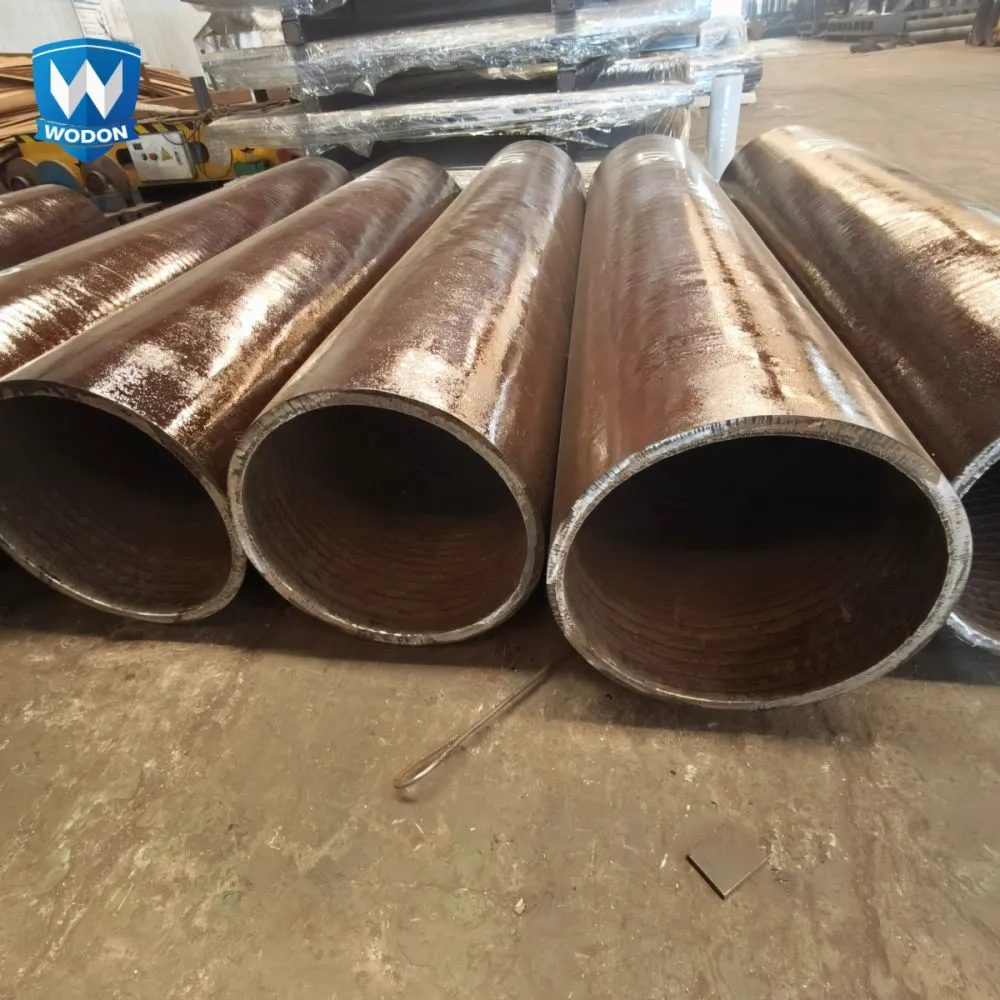
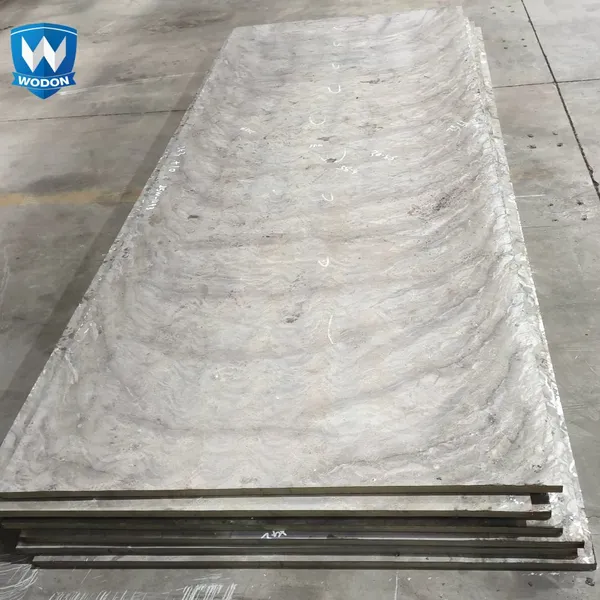
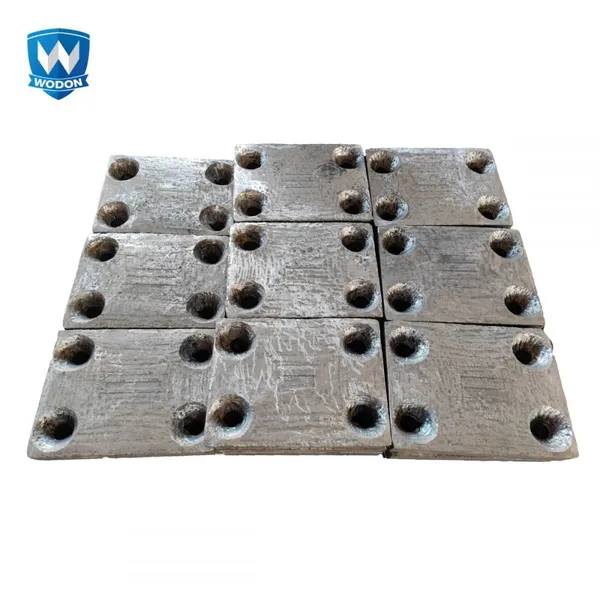
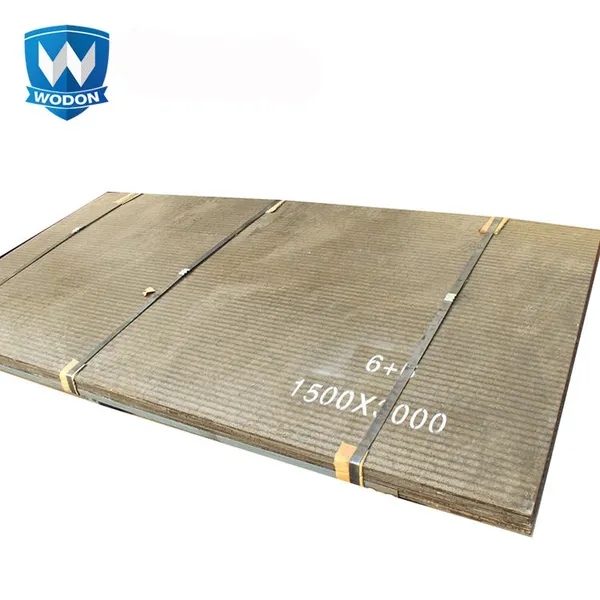
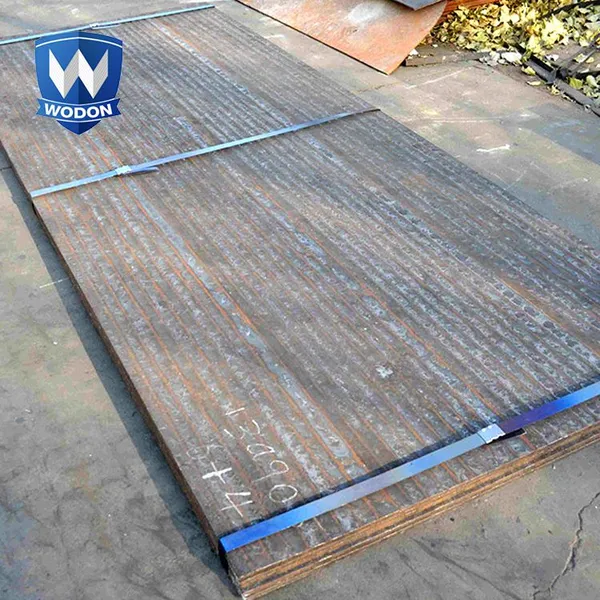
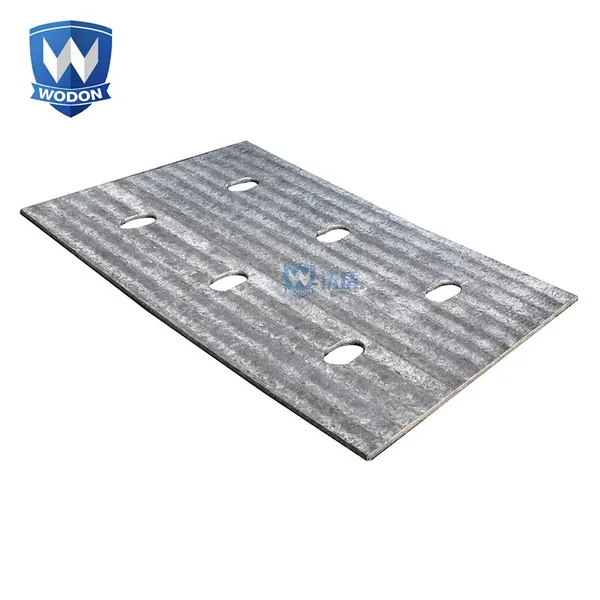
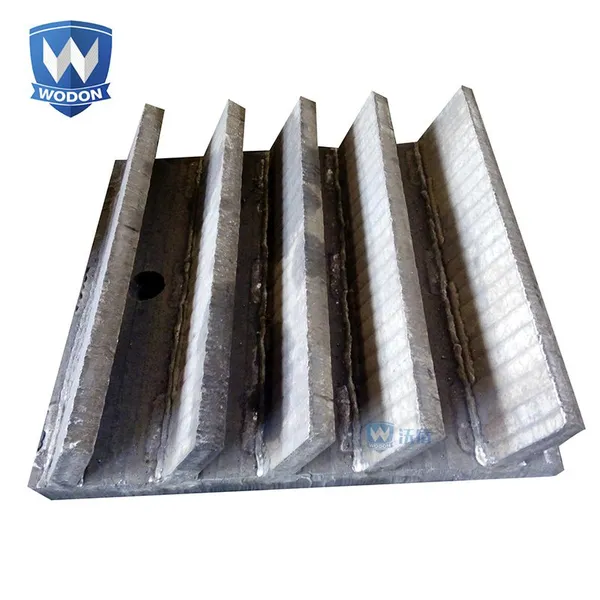
Standard plate dimensions are typically 1,400 mm to 1,500 mm in width and 3,000 mm to 3,400 mm in length. Plates can be supplied as flat panels or rolled to a specific radius for applications such as pipe elbows and cyclone bodies. Wodon Wear Resistant New Material also supplies plates pre-cut and drilled to match installation bolt patterns, reducing on-site fabrication time.
6. Industries That Depend on CCO Wear Plate Technology
Chromium carbide overlay wear plate is used wherever dry or semi-dry bulk materials move across steel surfaces at speed. The wear pattern is consistent: abrasive particles sliding, tumbling, or impacting against steel surfaces gradually remove material until the substrate is compromised. What changes between industries is the specific mineral, particle size distribution, velocity, and the dominant wear mechanism.
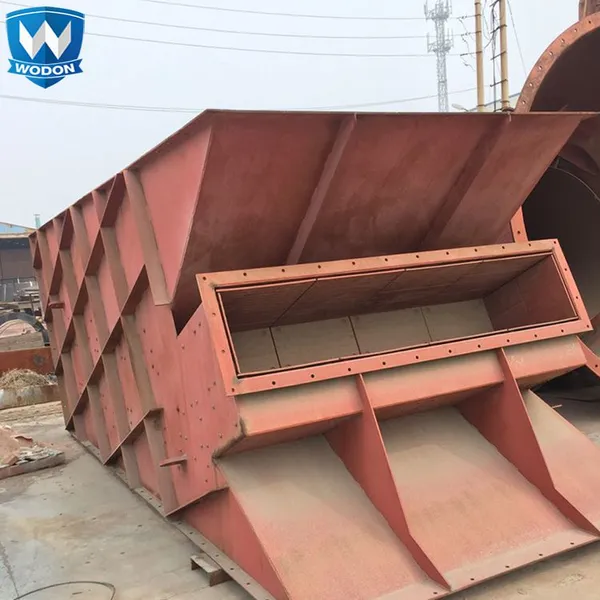
In mining, CCO plates line chutes, hoppers, transfer points, and crusher feed openings where ore and tailings create constant abrasive contact. A single copper concentrator might use several hundred square meters of chromium carbide overlay wear plate across its material handling circuit. In cement plants, the plates protect raw mill ducts, separator cones, fan blades, and clinker handling equipment — environments where temperatures can reach 300°C to 400°C and the abrasive medium includes hard clinker nodules and quartz-rich raw meal.
Steel mills use CCO plates in sinter plant chutes and blast furnace charging equipment. Power stations apply them in coal pulverizer internals and ash handling pipework. Dredging operations cover pump casings and barge loading chutes. Across all sectors, the common requirement is a material that absorbs continuous low-to-moderate impact abrasion without cracking — a requirement that chromium carbide overlay technology is specifically engineered to meet.
7. What Determines Service Life?
Service life is the product of several interacting variables. The four primary factors are the abrasive medium, impact energy, sliding velocity, and angle of impingement. Particle hardness is the dominant variable: quartz at roughly 1,100 HV wears a CCO plate substantially faster than limestone at roughly 250 HV, even at the same particle size and velocity.
Particle shape matters as well — angular, freshly crushed particles are far more aggressive than rounded, water-worn particles of the same hardness. A plate handling crushed granite might last 12 months, while the same plate handling river gravel could last 3 to 4 years under otherwise identical conditions.
The angle at which particles strike the surface also changes the wear mechanism. At low angles below roughly 30 degrees, particles slide and wear proceeds by micro-cutting — the regime where chromium carbides excel. At high angles above roughly 60 degrees, impact deformation dominates and matrix toughness becomes as important as carbide hardness.
At China Wodon, the technical team characterizes these service variables before recommending a plate configuration. A properly specified plate in a well-understood environment can deliver predictable service life, allowing maintenance intervals to be planned around scheduled shutdowns rather than emergency repairs.
8. Case Examples
The South American copper mine mentioned earlier replaced its 10 mm mild steel crusher discharge chute liners with an 8+4 chromium carbide overlay configuration. The chute handled roughly 2,800 tonnes of ore per hour with quartz content around 35%. After 12 months, ultrasonic measurement showed roughly 1.5 mm of overlay consumed, with localized wear of up to 2.2 mm at the highest-velocity impact zone.
The engineering team projected a total service life of roughly 24 to 28 months for the main chute body. The annual liner replacement budget dropped by an estimated 62% in the first year alone.
A quarry in Southeast Asia installed 6+3 CCO plates on a vibrating screen undersize hopper that had previously required quarterly relining. After roughly 8 months, the plates showed only superficial polishing with no measurable thickness loss in most areas. The maintenance manager cited the elimination of roughly 6 unplanned downtime events per year as the primary benefit.
9. Frequently Asked Questions
9.1 How long does a chromium carbide overlay wear plate typically last?
Service life depends on the abrasive medium, impact conditions, and plate configuration. In moderate abrasion such as a coal transfer chute, an 8+4 CCO plate might serve for roughly 3 to 5 years. In severe abrasion with coarse hard mineral particles — a primary crusher discharge — the same plate might last roughly 12 to 24 months.
The key metric is wear rate in millimeters of overlay consumed per thousand tonnes processed. A qualified manufacturer can estimate this based on specific service conditions.
9.2 Can CCO wear plates be welded or cut on site?
CCO plates can be cut using plasma arc cutting or carbon arc gouging, and welded to structural steel using standard mild steel electrodes such as E7018 or ER70S-6. Welding should be done on the base plate side, avoiding the overlay surface. When welding overlay-side to overlay-side, a nickel-based or stainless steel electrode is recommended to prevent cracking. Preheating to roughly 100°C to 150°C is advisable for thicker plates or when ambient temperatures are below roughly 10°C.
9.3 What is the difference between a CCO wear plate and a bimetallic wear plate?
The terms are often used interchangeably, but there is a distinction. A bimetallic wear plate refers to any composite plate with a wear-resistant layer and a structural backing. A CCO wear plate specifically refers to a bimetallic plate whose wear layer is formed from a chromium carbide-rich hardfacing alloy deposited by welding. In procurement, specifying "chromium carbide overlay" rather than simply "bimetallic" ensures you receive a product with chromium carbides as the primary hard phase rather than alternative alloy systems.
9.4 Are the surface cracks on a CCO plate a defect?
The fine, evenly spaced transverse cracks visible on the surface of a chromium carbide overlay wear plate are a normal feature of manufacturing. They form as the weld metal cools and contracts, serving as stress-relief cracks that prevent larger, uncontrolled cracking. A uniformly cracked pattern perpendicular to the welding beads, spaced roughly 5 to 15 mm apart, is typically a sign of proper manufacturing control. A plate showing no surface cracks may have insufficient carbide content to provide effective wear resistance.
Recently Posted
-
CCO Wear Plate Applications in Mining: Chutes, Hoppers, and Crusher Liners
August 13, 2026An iron ore mine in Western Australia was replacing the discharge chute liners on its primary crusher every 11 weeks. The 12 mm mi Read More
 -
How to Choose the Right Chromium Carbide Overlay Wear Plate: A Procurement Guide
August 11, 2026A cement plant in North Africa ordered 120 square meters of chromium carbide overlay wear plate for a clinker conveyor chute rebui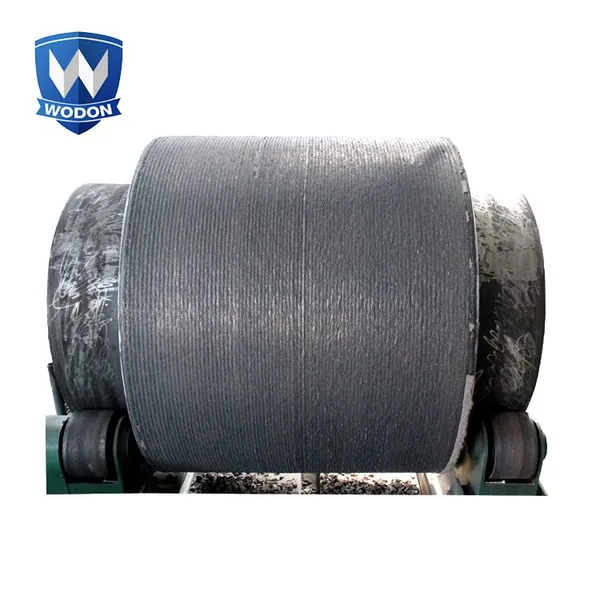 Read More
 -
CCO Wear Plate vs. Hard Chrome Plating: Comparing Wear Protection Methods
August 10, 2026A hydraulic cylinder manufacturer in Germany faced a recurring warranty claim: the chrome-plated piston rods on their mining excav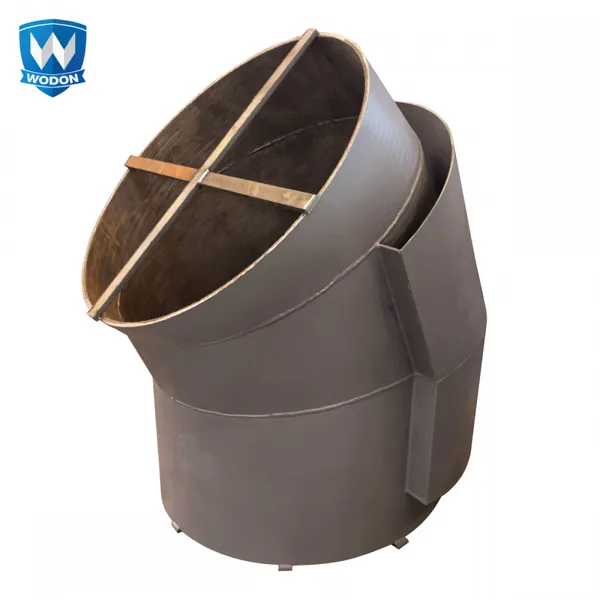 Read More
 -
Wodon Bimetallic Wear-Resistant Steel Plates: Engineered for Superior Performance and Longevity
January 3, 2025In the demanding landscape of heavy industries, where abrasion, impact, and corrosion are constant adversaries, Wodon Bimetallic W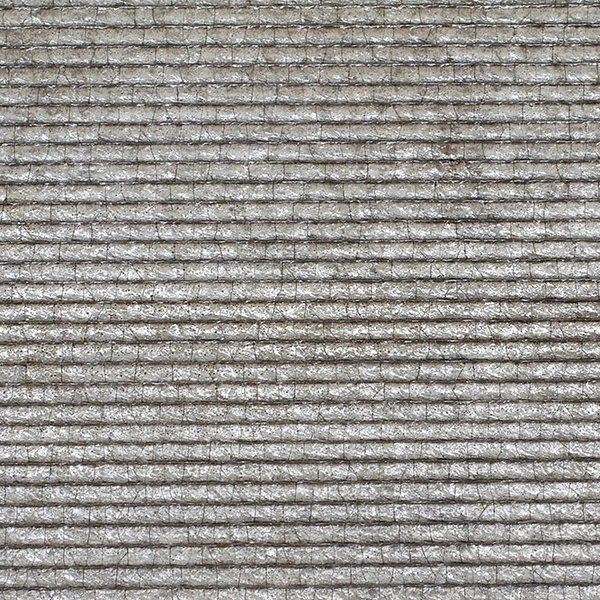 Read More

Contact Us
Recommended Products
-
 Chromium Carbide Overlay Wear Plate WD-1900 Smooth Surface CCO Wear PlateNegotiableMOQ: 1 Square Meter
 -
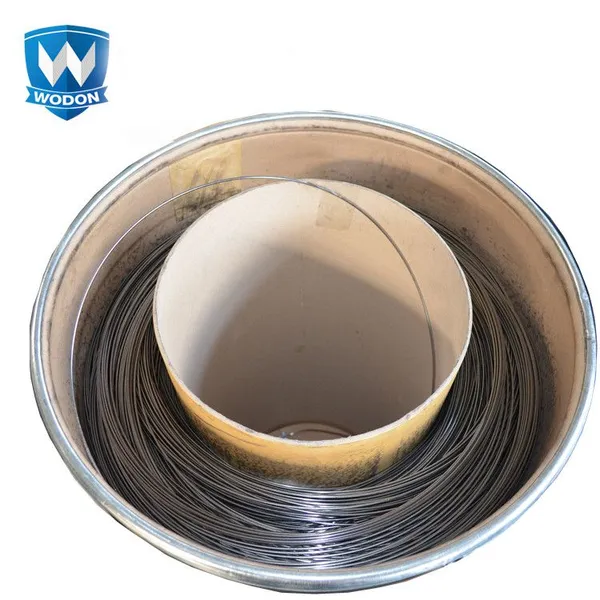
Hardfacing Wear Resistant Flux Cored Welding Wire With High HardnessNegotiableMOQ: 1 Kilogram
-
High Abrasion Resistant Hardfacing Wear Liners Chromium Carbide Overlay Cco Bimetallic Wear PlateNegotiableMOQ: 1 Square Meter
-
Chrome Carbide Wear Resisting Plate High Wear Steel Plate Wear Liner Platebimetallic Wearable Lining Plate Bucket ExcavatorCHF 300 - 300MOQ: 1 Square Meter
-
Wodon Customizable Steel Flux Cored Welding Wire Manufacturer's Valve Surfacing Gas Shielding OEM SupportUS$ 4.02 - 4.02MOQ: 1 Kilogram
-
Abrasive Resistence Wear Parts Overlay Carbon Chromium Steel PlateNegotiableMOQ: 1 Square Meter
-
Wear Plates for Heavy Duty Mining Applications High Chromium Carbide Overlay Abrasion Resistant and Customizable SizesNegotiableMOQ: 1 Square Meter
-
Hardfacing Truck Liner Plate Chromium Carbide Overlay Wear Plate Cladded PlateNegotiableMOQ: 1 Square Meter
-
Custom Overlaying Wear Plate - Economical Choice for Durable Industrial Applications, High-Quality Fabrication, 55HRC HardnessNegotiableMOQ: 1 Square Meter
-
Wear Abrasion Resistant Overlay High Carbon High Chromium Steel PlateNegotiableMOQ: 1 Square Meter
-
Wear Resistant Steel Plate 6mm 8mm 12mm Thickness Hot Rolled Carbon Steel Plate Wear PlateNegotiableMOQ: 1 Square Meter
-
Bimetallic Cco Clad Composite Overlay Hardfacing Wear Resistant Steel PlateNegotiableMOQ: 1 Square Meter
-
High-Performance Wear Plates for Cement Mills Chromium Carbide Overlay Long Service Life Reliable PerformanceNegotiableMOQ: 1 Square Meter
-
Wear Resistant Steel Plate Liners for Chutes Special Use Wear LinersNegotiableMOQ: 1 Square Meter
-
Cco Hardfacing Surfacing Tungsten Carbide Wear Resistant Plates Liner for SilosNegotiableMOQ: 1 Square Meter
-
Wodon Chromium Alloy Bimetal Hardfacing Plate for Mining MachineryCHF 300 - 300MOQ: 1 Square Meter
-
Hardfacing Abrasion High Wear Resistant Performance Cladding Plate TubeUS$ 399.69 - 399.69MOQ: 1 Square Meter
-
Hardfacing Plates for Manufacture Industry Value High Chrome Wear PlateUS$ 100 - 300MOQ: 1 Square Meter
-
Customizable OEM/ODM Wear-Resistant Soldering & Surfacing Flux Cored Welding WiresUS$ 9.9 - 9.9MOQ: 1 Kilogram
-
Chromium Carbide Round Pipe 6m and 12m Lengths Bending & Cutting Services Welding Technique Saw TechniqueUS$ 6 - 6MOQ: 1 Square Meter